After last month's deluge, the rain stopped and hasn't returned. The garden has baked from the heat and drought.
I have been watering as much as possible so Bill gifted me a new hose pipe - red was chosen so it doesn't resemble a slithering snake. He felt guilty after accidentally shooting holes in the old one while protecting the garden from marauding varmints.
This is the same area as in the picture above. After the melons and beets were harvested, small spinach seedlings were planted between the tomato plant's roots.
This row now has tiny onion seedlings below the tomatoes. When the first hard frost kills the tomatoes, they will be cut at the soil level. The roots will remain and decompose over winter so as to not disturb the onions. The fence and posts will then be removed and a hoop house put up over the onions. They are probably too tender to make it through the winter unprotected.
Even though we provide water, the birds have begun pecking the tomatoes. If the drought continues, squirrels will start eating them too. The odd things hanging on the fences and wrapped around the ripening tomatoes are grocery produce net bags - which birds hate. They are also used to hold cherry tomatoes whilst sipping coffee and picking with one hand.
As the summer vegetables finish, they are being replaced by winter ones. Drawing a diagram ahead of time and planning what goes where never seems to work for me. Whichever seedlings are ready will be planted into whatever spot is empty. I stopped working when the sun rose high enough and took these pictures. Detailed planning is not my strength.
With each bed, the first step is to dig compost out of the pile. Last fall, it was stuffed high and allowed to decay over winter. When spring arrived, I started removing one side and then worked across to the other. The goal is to empty all of the usable decomposed mulch to make room for more debris before the fall cleanup.
Each garden row is turned over with a pitchfork, and then compost, fertilizers, and amendments are added depending on what is needed. This spot was rock hard and had large clumps of clay. The garden soil is improving every year but it still has difficult spots. Dried grass clippings were added to the compost and then a pinch of 13-13-13 fertilizer was dropped in each hole for the lettuce seedlings. After they are established, they will get a spray of an organic fertilizer.
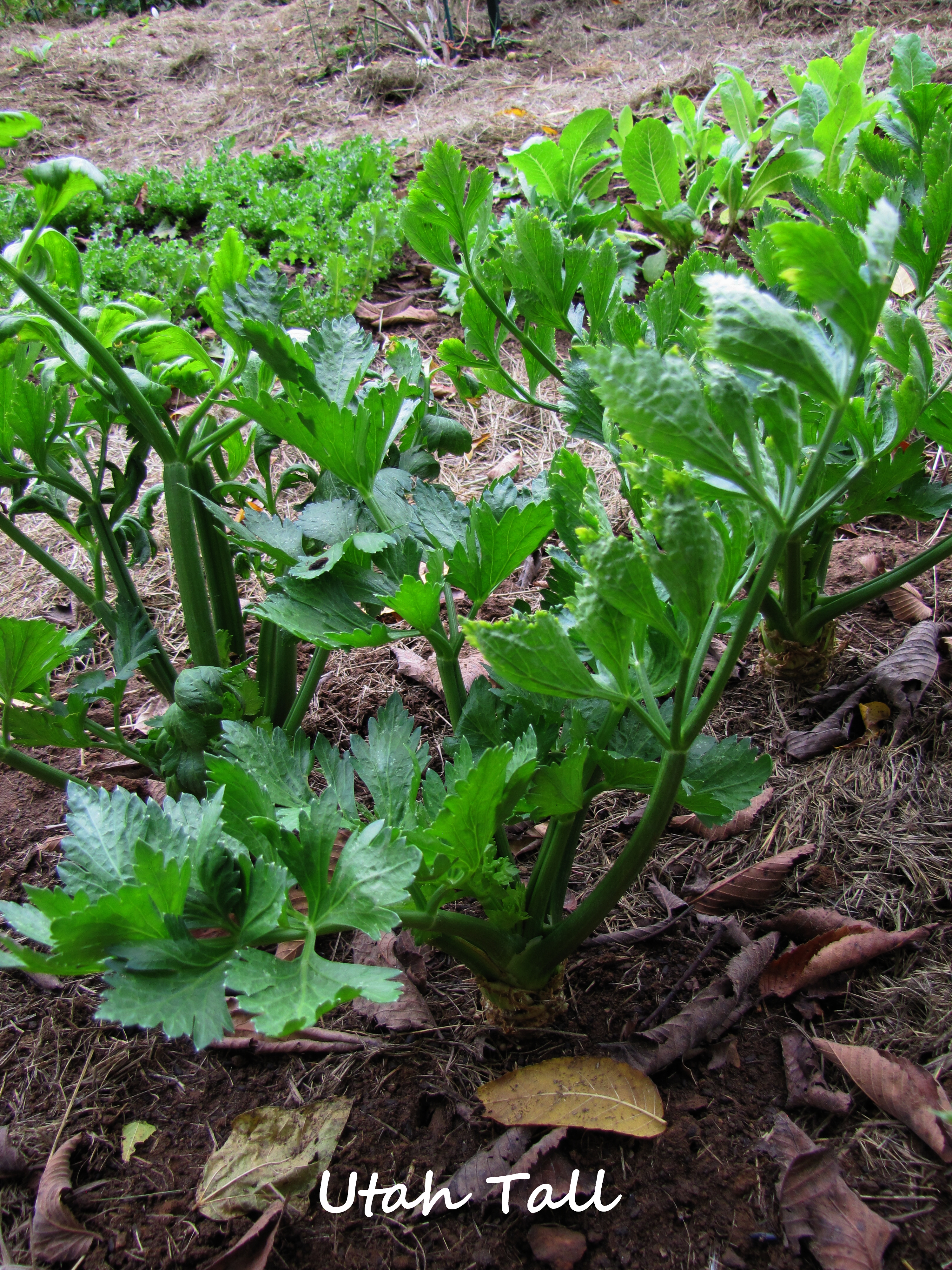
After it was planted, I began working in the celery bed beside the lettuce plot. Four different varieties were growing as a test but all became spit-out-of-your-mouth-bitter. Ugh! None have been harvested and used this season. After research, it seems heat, drought, or low nutrients can cause bitterness. I had all three problems. I trimmed away the bad stalks then fed and watered them constantly in hopes of an improvement.
Utah Tall's flavor has improved but is still not great. Tango tasted fine but looked pathetic. This was their second failure and so have been ripped up. Chinese Pink has improved a little but only the healthy ones were kept. Maybe they will improve after the cold weather arrives.
The Afina Cutting Celery is a winter variety that I have grown for years. It can withstand frigid weather without missing a step. Even though it tasted bitter, I think it will improve as the weather cools.


Pickling cucumbers are best for pickling because they stay firm and don't become mushy like varieties used for fresh eating. Whether the weather is dry or rainy, the pickling varieties always develop mildew and fungal diseases. It starts with the older leaves and moves up the vine. It will still produce fruit but it will eventually die.
In the past, I used fungal sprays to fight the problems but it would only delay the inevitable. Now I have stopped wasting my time. I plant seeds whenever an empty spot appears, harvest what is produced, rip it out, and then move on. It is much less work.
Natsu Fushinari has been the best disease-resistant cucumber variety I have found. This is my third year growing it and it has always produced well. This one plant vining up a shepherd's hook had five big cucumbers when this picture was made.
By mistake, the National Pickling and Natsu Fushinari were planted side by side (I forgot which I had planted).
In the past, I have always been careful to keep them separated to avoid disease cross-contamination but I discovered it doesn't matter. The pickling variety became sick but the Natsu Fushinari stayed healthy.
Even though the leaves were intertwined, the diseases didn't spread. It showed how mixed varieties of the same vegetable growing side by side and treated exactly the same can perform differently. Finding the right varieties for my space matters.
In the back corner of the garden looking scraggily is the Zucchino Rampicante, moschata (vining zucchini). It was planted in the spring and is still producing even though it looks bare.
Oddly, the fruit only grows on the backside or southeast side of the fence. The only thing we can figure out is that the blooms open at sunrise and turn facing the light.
The flavor isn't as good as regular zucchini, but since it is prolific, I keep experimenting with new recipes.
The bitter melon is quite content wherever it is planted but I haven't found a recipe yet to make them taste enjoyable. They are too easy to grow to not learn to like them.
Now for news about the summer squash area.
First, the Lima beans have overtaken the arch, spread down the fence row, and are shading the peppers so much that it has slowed their production. I tried trimming the Lima bean vines but gave up. I seem to always underestimate how fast they grow and how slow I move in the heat.
Now for the BIG news. I have four yellow squash that are still alive and producing! The squash bugs haven't returned nor have the squash vine borers killed them! Never in my many years of gardening have I had any success growing zucchini, yellow squash, or anything in the Pepo or Maxima families. The squash vine borers have always, always, always killed them. I am gobsmacked!


NOW THE BIGGEST NEWS EVER! The sole growing (our favorite) winter squash, Georgia Candy Roaster, pepo, died last month so more seeds were planted. A new plant survived and has spread over the arch, down the field fence, and back over the second arch! It is going wild! It was my goal, my big dream this year to have this arch covered with Georiga Candy Roasters. The impossible has happened!
Gardeners in parts of the world without squash vine borers may not realize how major this accomplishment has been. I have done the undoable for my area and I am celebrating! I don't know what I did right and don't know what to do next year to make sure it happens again. All I know is that this year it happened! I have squash!!!!!
I HAVE WON A BATTLE IN THE WAR AGAINST SQUASH VINE BORERS!!!
SCORE
Squash vine borers 1000 wins to my 1 win